Defining Maintenance as Part of Long-Term Asset Protection
When pipes burst this winter in a 36-unit building in Milwaukee, Wisconsin, and 53 people had to be evacuated due to heat and water failure, local news organizations referred to the landlord as “notorious” for being sued by the Department of Justice. The lesson? Maintenance isn’t a box to check off—it’s the foundation of property management, and tackling it is critical for investors.
Maintenance involves more than just repairs. It means responding to requests, monitoring property health, and finding solutions to minimize problems. After over 15 years of experience in this industry, Performance Asset Management (PAM) views maintenance as the space where resident experience, asset protection, liability control, and financial performance intersect.
Keep reading to learn how to treat maintenance as a critical component of long-term asset protection that must be achieved through proactive, performative decisions, selecting and vetting appropriate support, and properly balancing costs. Investors can then replicate these maintenance practices in their own spaces or better evaluate property management companies.
How Should Investors Approach Maintenance for a Property?
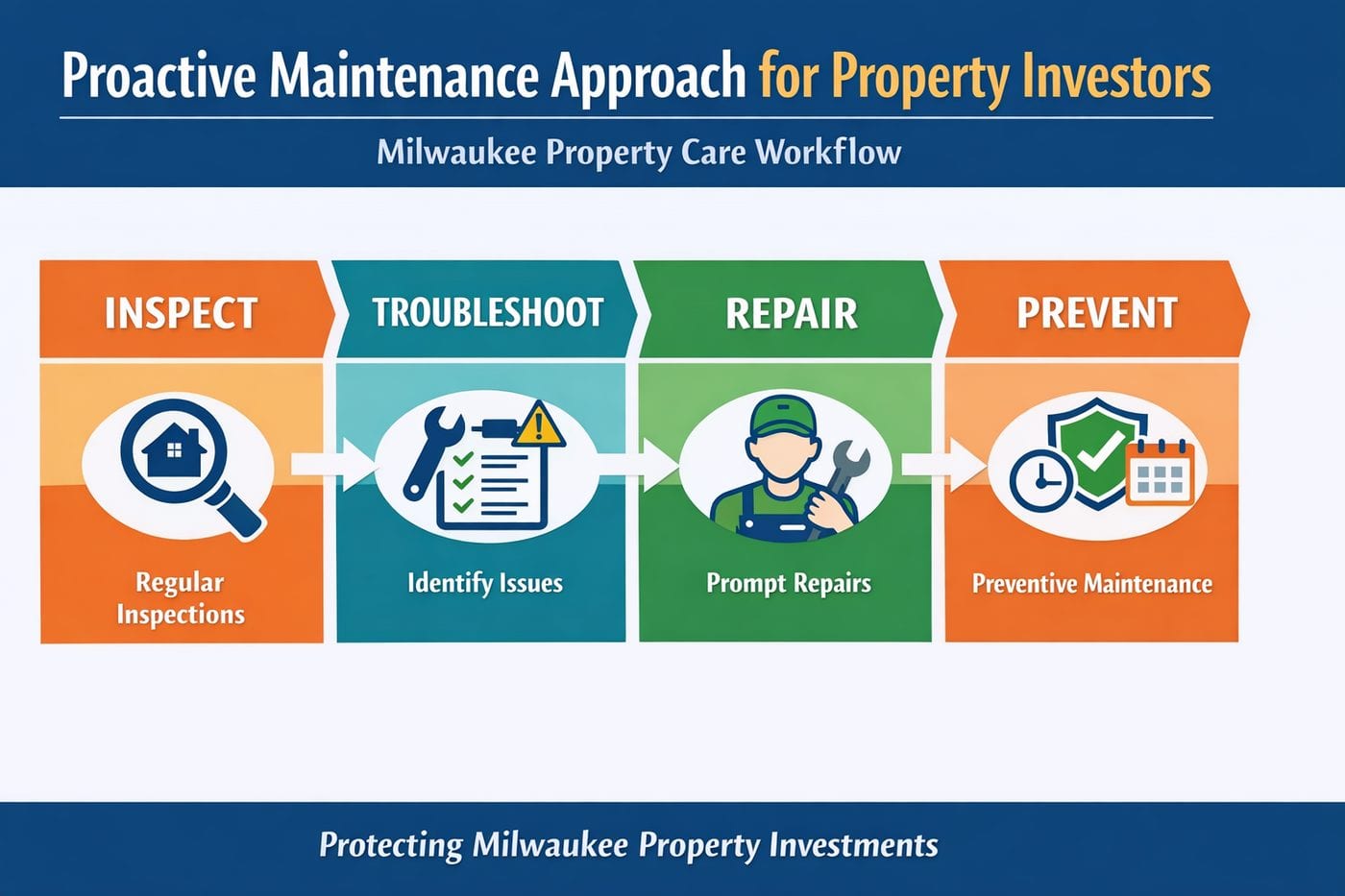
Maintenance for a property depends on discovery, troubleshooting, and problem-solving, which demands taking a proactive approach.
In terms of a property investment, maintenance involves the responsibility for the overall health of the home. Most houses are designed to require minimal upkeep, particularly for elements like roofs, siding, windows, furnaces, and foundations. However, certain repairs, such as leaks or structural damage, must be addressed immediately as they can lead to further damage.
Proper maintenance safeguards residents and property owners from liability at the local, state, and federal levels, while also protecting the reputation of the property. On the other hand, neglecting maintenance can negatively affect property value, financial performance, and the overall experience of residents. In short, the quality and effectiveness of a maintenance program have a direct impact on the asset itself and the performance of investors.
Reactive repairs that lack a structured approach often lead to unnecessary costs. For example, without a system, such as a tenant portal, where residents can provide information about the maintenance issue and answer a few short questions before submitting a request, a property owner might send a technician to the home simply to change a thermostat battery.
At PAM, the approach to maintenance is handling it with immediate action, which we call “urgency and now.” Though the team acts fast, part of our goal is to ensure we have the information needed to make the most efficient and effective decision. Competent maintenance benefits both residents and investors, while poor maintenance hurts everyone involved. If we correctly identify the issue, we can send the right person for the job.
How Does Performance Asset Management Select and Vet Property Maintenance Vendors?
PAM selects and vets maintenance vendors based on reliability, diagnostic skill, and consistency—not just cost.
When it comes to finding maintenance in a market brimming with options like Milwaukee, Wisconsin, it’s important to remain open to recommendations for new vendors. A preferred method is referrals from our vendor co-op. Existing vendors understand our standards and only recommend other high-quality contractors.
Another method is active scouting. For instance, taking a visit to Home Depot early in the morning, looking for small, organized contractors who are well-prepared and professional, while adhering to the following standards:
Licensed and insured
Experienced in their trade
Communicative and respectful
When onboarding vendors, we ask specific questions, such as for examples of previous jobs, and discuss their fees to identify contractors who align with our standards. The goal is to find vendors who are skilled, available, and honest about their limits to provide top-tier work without overspending. Once those qualifications are met, we evaluate them based on:
Response time and availability
Quality of finished products
Pricing alignment with projections
If a vendor meets these criteria and performs consistently, they keep working with PAM. Regardless of which method brought the vendor to our attention, we continuously review their performance, cost, timeliness, work quality, and feedback from residents. Most maintenance on our Southeast Wisconsin-based properties can be handled by a highly skilled, organized generalist, while more expensive specialists are used only when necessary.
How does PAM balance cost control with quality workmanship?
PAM treats workmanship as a performance lever directly affecting turnover, capital expenses, and long-term value.
Everyone wants low-cost options, especially with inflation. Negotiating discounts through our Milwaukee-based vendor co-op often saves 20-40% compared to other standard market rates. However, the cheapest solution isn’t always the best. There’s a “right way” to fix a problem, and the goal is to find the most cost-effective solution without compromising quality.
Using unlicensed or inexperienced contractors may seem cheaper but can create risks, lack warranties, and ultimately cost more in the long run—too many investors learn this the hard way. Other lessons for balancing cost with quality include:
Base decisions on durability, instead of quick fixes
Diagnose the problem before pricing the work
Continue to evaluate vendors based on measured outcomes
Perform preventive maintenance to reduce emergency spending
Include long-term investor impact in cost discussions
How Should Investors Evaluate a Property Maintenance Approach?
Base the evaluation on outcomes over time, instead of isolated repair costs or one-off response times, and review the overall maintenance strategy.
In terms of metrics for evaluating a maintenance approach, resident turnover rates, annual maintenance as a percentage of gross rent (adjusted for asset age/location), the number of days to complete work orders, and vendor performance are solid metrics to support a thorough analysis.
For property owners considering self-managing the maintenance process, the lowest-priced vendors can cause trouble in both the short and long term. Additionally, vendors who lack organization, an on-call team, or have poor emergency response planning are all red flags.
Rather than viewing maintenance as a line item to minimize, PAM treats it as a performance lever that directly affects turnover, capital expenses, and long-term asset value. PAM controls costs by eliminating waste, repeating work, and avoiding unnecessary emergencies—while maintaining high workmanship standards that protect assets and stabilize returns.
The maintenance expectations for investors working with PAM include that all non-emergency maintenance over $500 are communicated for approval, and emergency issues are resolved promptly, prioritizing resident safety. Ultimately, efficient maintenance drives lower turnover, enhances financial performance, and supports long-term asset preservation.
Share your investment goals to discover your property maintenance options if you’re located in Southeast Wisconsin and are serious about your investment. Let us help create a more strategic approach to help maximize your returns.