What Is the Difference Between Rent-Ready and Move-In-Ready for Property Investors?
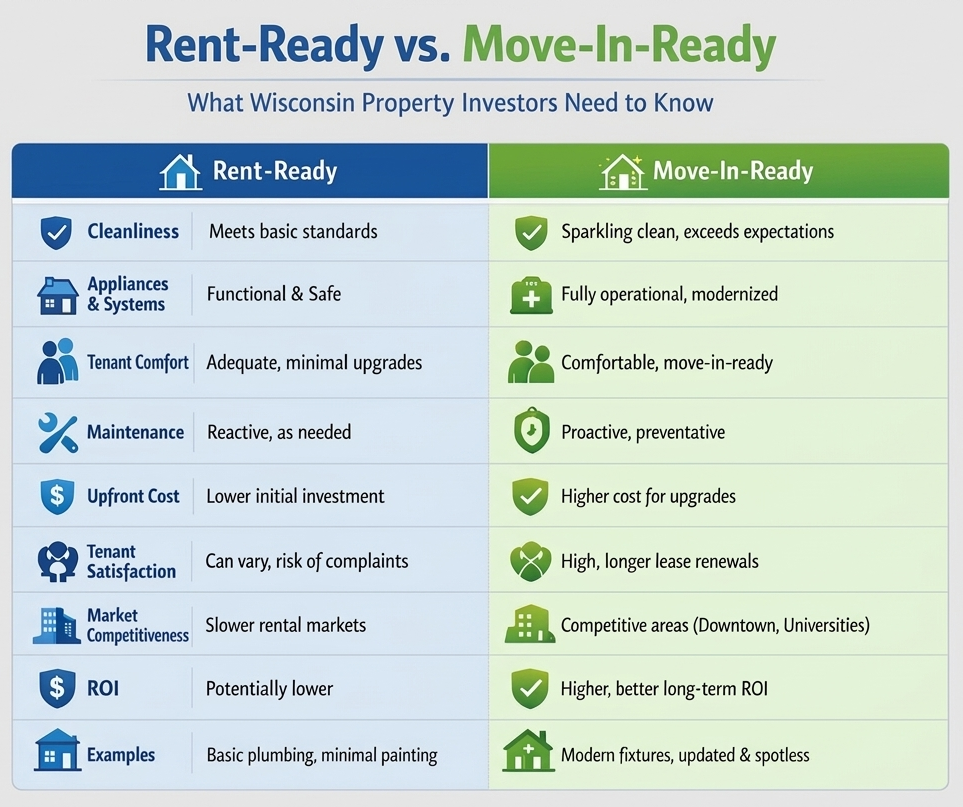
Some investors think of rent-ready and move-in-ready as the same, but tenants tend to feel differently. Rent-ready typically means a unit that meets basic legal and operational standards to be leased—plumbing works, safety systems are operational, and the property is clean enough to rent legally. Move-in-ready goes beyond that. And investors should know exactly how.
At Performance Asset Management (PAM), move-in-ready means the unit is fully prepared for a tenant to enjoy immediately. Everything is clean, fully functional, and meets the expectations of today’s renters. Move-in-ready units create a stronger first impression and tend to attract tenants who are likely to stay longer and take better care of the property.
Properly preparing a unit helps tenants feel more satisfied, since residents increasingly expect landlords to meet their standards. Understanding the difference between rent-ready and move-in-ready helps investors increase their long-term returns. Learn to go the extra mile to ensure your space is move-in-ready to meet and exceed tenant expectations from day one.
Why Is It Important to Distinguish Between Rent-Ready and Move-In-Ready?
Rent-ready vs. move-in-ready standards affect property investment performance by influencing tenant satisfaction, lease renewals, maintenance costs, and long-term ROI.
Wisconsin rental laws state that rent-ready units must meet building codes, safety regulations, and habitability standards. Operationally, rent-ready might include functional appliances, working plumbing, and a clean, safe environment. Move-in-ready raises the bar in terms of cleanliness, fully functioning systems, and attention to tenant comfort.
Move-in-ready homes cost more upfront because property owners have to invest in cleanliness, minor upgrades, and attention to detail. However, tenant turnover is expensive. According to Apartments.com, the average turnover cost ranges from $1,000 to $5,000 per unit—often more when vacancy loss is included.
By delivering a property in strong move-in condition and reducing early dissatisfaction, owners can lower the likelihood of costly turnovers and protect long-term ROI. By contrast, stopping at rent-ready standards may save money upfront but increases the risk of early dissatisfaction and preventable turnover.
Additionally, units prepared to a move-in-ready standard tend to generate fewer early maintenance requests and less tenant friction, reducing reactive management time. And that’s because rent-ready units often lead to repeat maintenance requests and tenant complaints, which consume valuable time and resources.
Rent-ready spaces also run the risk of exposing residents to small problems immediately, such as cleanliness issues or deferred maintenance. Although minor at first, these issues can easily escalate into negative reviews, quicker turnover, or higher service costs.
How can Rent-Ready vs. Move-In-Ready Affect Property Investments?
Oftentimes, investors think that meeting the minimum standards is enough when it comes to deciding between rent-ready and move-in-ready. Less than a decade ago, rent-ready aligned with what tenants expected. But tenant expectations have evolved, favoring move-in-ready.
Investors can lock in a negative experience if a tenant expects a move-in-ready unit but only gets a rent-ready space. While everyone’s definition of “clean” differs, it’s important to present a property as if it’s been prepared for a particularly tidy renter.
How Should Investors Make a Rent-Ready Unit Move-In-Ready?
Property investors should decide between move-in-ready vs. rent-ready by evaluating market expectations, tenant demographics, and long-term return on investment.
Market expectations drive the distinction between move-in and rent-ready. In competitive areas, for example, in Milwaukee, Madison, and Green Bay rental markets, tenants typically demand move-in-ready units. In slower markets, the line between the two is less distinct. To meet tenant expectations, the best approach is to:
Evolve as an investor: Move beyond past rent-ready practices, which are less likely to satisfy current tenant expectations, especially in competitive markets.
Perform market assessments: Assess the current market value and competitor listings before upgrading, and continue to make assessments and improvements.
Remove personal biases: Avoid letting personal opinions dictate property standards. Distinguish personal home preferences and expectations from tenant expectations to keep standards aligned and professional.
Support the investment: Apply and invest upgrades that support higher rent, faster leasing, better tenants, higher renewals, and fewer turnovers.
Never misrepresent: Use accurate photos, and apply an objective filter by asking yourself, “Would I want someone I care about living here?”
Measure emotional ROI: Consider sending surveys, reviews, or gaining feedback from residents directly, because tenants who feel respected will care for the property differently.
Avoid deferring: Postponing potential improvements rarely makes the issues more cost-effective. Instead, it is more likely to disrupt asset value.
Families, professionals, and tenants who value convenience and quality are more likely to expect move-in-ready standards. Younger renters may initially tolerate lower standards, often due to inexperience. However, that can change quickly, as today’s tenants have increased expectations for cleanliness, functionality, and modern amenities.
How Should Owners Reassess Standards Over Time?
Investors should regularly evaluate unit standards by gathering information from comparable units, analyzing resident feedback, turnover patterns, and maintenance requests to identify areas where improvements could boost satisfaction and retention.
The framework for reassessing move-in-ready standards is structured by market alignment. Investors need to focus on what tenants continue to expect in the area, the type of renter that works best, and their financial goals.
Emotional alignment with tenants is just as important as financial alignment. Focusing on both creates environments that attract and retain great tenants while maximizing long-term ROI. Evolving to a move-in-ready policy that supports and encourages quality tenants and continues to reassess those standards is the right choice. For Wisconsin housing market data:
Wisconsin Department of Administration:
DOA Population and Housing Unit Estimates
Wisconsin REALTORS Association:
Wisconsin REALTORS® Association: Wisconsin Housing Statistics
U.S. Census Bureau:
Census Bureau Data
Milwaukee Department of City Development:
Department of City Development - DCD
University of Wisconsin–Madison Applied Population Lab
University of Wisconsin–Madison: Demographic and Housing Trend Data
Rent-Ready vs. Move-In-Ready: How Can Wisconsin Investors Protect ROI?
Now that you understand that rent-ready satisfies legal requirements, while move-in-ready aligns with market expectations. It should be clear how this distinction directly impacts tenant satisfaction, efficient resources management, and long-term investments.
Because turnover costs range from $1,000 to $5,000 each unit, not including vacancy losses, early dissatisfaction can cause friction from tenants in terms of negative reviews, conflicts over maintenance, and increased turnover. Preparing units involves proactive decisions to match tenant expectations to protect investments.
If you are unsure whether your current standards are in line with the market, review comparable listings, vacancy trends, and local housing data via the links listed in the previous section. Then evaluate your units with an objective eye.
The goal at PAM t is to help Investors across Southeast Wisconsin with meeting and exceeding tenant expectations using the lens of market data and tenant demands. If you need clarity on how your property compares in this current market, a professional evaluation can identify opportunities to make your unit move-in-ready, protecting your investment.