Why Are Rents Declining in Some U.S. Markets Right Now?
Mispricing a rental can cost an investor thousands in lost rent income. That’s without considering ongoing fixed costs or reduced perceived property value. Mispricing is becoming increasingly common due to declining rent, according to Zillow’s Housing Trends Report 2025. To protect themselves, investors need to stay aware, invest with confidence, and reassess.
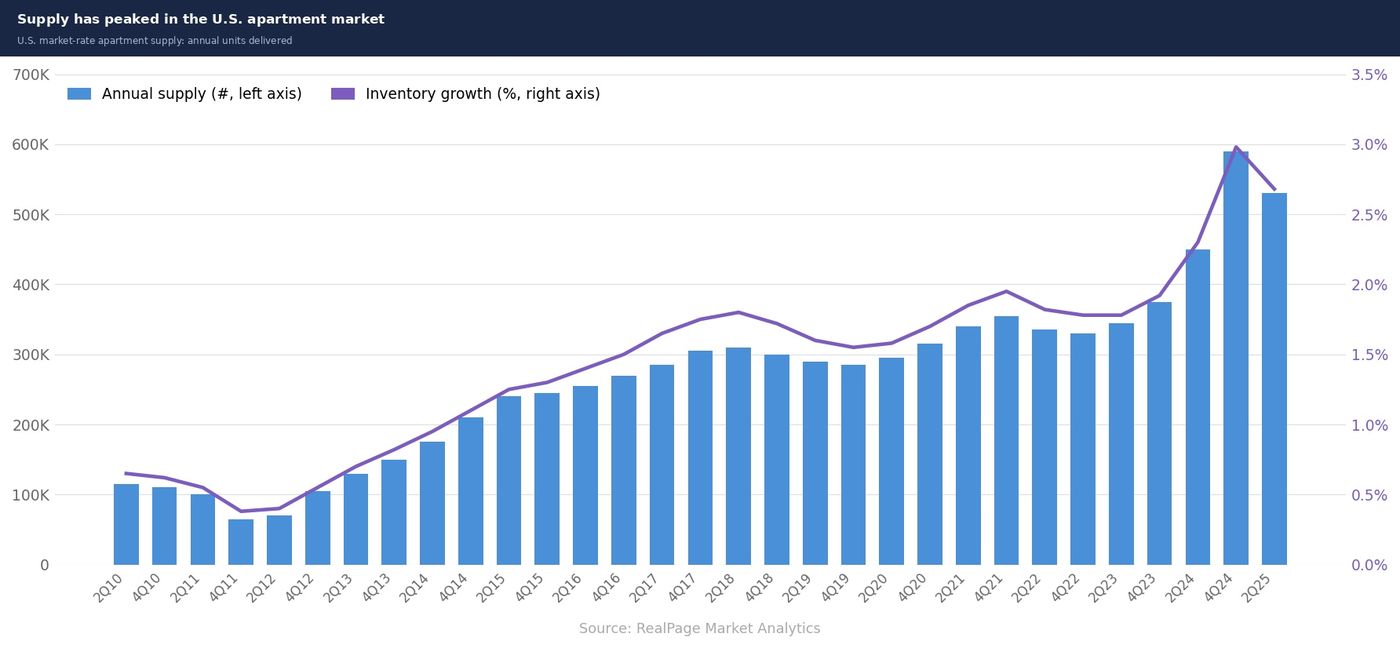
Performance Asset Management (PAM) is qualified to keep investors informed, as we have nearly two decades of experience supporting property owners through challenging times. We understand that at this stage, high-growth areas include the South, Southeast, and Southwest, primarily due to an oversupply of new multifamily housing outpacing demand.
Post-COVID-19, developers accelerated construction. At that time, financing conditions were favorable, and demand was strong. Private credit markets also played a major role. They provided additional capital for rapid multifamily development projects with over 50 units.
Currently, there is an excess of inventory compared to demand, putting pressure on rents. Keep reading to understand whether these declines are temporary or a long-term shift. Get more information on why some areas are more stable than others. Then, safeguard your investments by implementing the property management strategies outlined in this article.
Are Rent Declines Temporary or a Long-Term Market Shift?
Rent declines in oversupplied Sunbelt markets are partly temporary and partly permanent. The oversupply will eventually be absorbed, but remote work and migration volatility have structurally changed how those markets behave.
Cyclical rent declines are often tied to new construction flooding certain markets. The Harvard Joint Center for Housing Studies has noted that elevated multifamily completions can temporarily outpace demand, putting downward pressure on rents.
Over time, these markets may stabilize. Demand can gradually absorb excess inventory as occupancy increases. But structural changes also influence rental markets, especially shifts in how and where people choose to live.
During the COVID-19 pandemic, the housing markets in several Sunbelt states experienced significant population growth. Notable examples include Austin, Texas; Phoenix, Arizona; and certain areas of Florida. Demand for warmer climates, larger apartments, more outdoor space, and lower population density surged during COVID-19.
Now, those same transplants are facing challenges related to infrastructure and lifestyle adjustments. They are experiencing long commute times, traffic congestion, and strained public services. In a cloud-based economy, people can relocate more easily than ever before. That flexibility is contributing to the volatility in certain housing markets.
Rents in Austin have declined significantly, now sitting roughly 20–22% below their peak following a surge in new supply, according to Redfin’s January 2025 Rental Tracker report. Those previously attractive housing markets are seeing flat-to-declining rents in smaller properties and significant corrections in large multifamily homes.
Is Southeastern Wisconsin More Stable Than Other Regions?
Compared to high-growth Sunbelt markets where new deliveries have driven rents down 20% or more, Southeastern Wisconsin has remained stable — with demand consistently outpacing supply and fewer large-scale multifamily deliveries disrupting the market.
Rental vacancy rates in the Midwest have remained significantly lower than in high-growth regions, generally hovering near long-term averages even as supply-heavy Sunbelt markets have experienced elevated vacancy, according to the U.S. Census Bureau.
As opposed to COVID-19 migration hotspots, Southeastern Wisconsin experienced a Midwest consistency. The state has avoided boom-bust cycles of rapid increase and then sharp corrections. The demand for housing remained steady. New construction in the area has been controlled and strategically distributed across local communities.
In Southeastern Wisconsin, development tends to follow the long-term planning guidelines. By managing the supply in each submarket, the region maintains a strong balance between rental inventory and reliable tenants.
Demand for housing continues to exceed the supply in many areas. This supports stable rent pricing over time. Additionally, neighborhood stability, safety, and infrastructure continue to contribute to long-term tenant retention and resistance. For investors, the following tends to make the region more stable:
Long-term, thoughtful development planning
Stable, established neighborhoods
Less reliance on large-scale multifamily projects
In many of the declining markets, it’s the opposite—there’s significantly more supply than demand, especially in newer multifamily developments. That imbalance drives rent reductions.
How Do Declining Rents Impact Property Investors?
Declining rents compress cash flow, strain return projections and can push previously stable investments into negative territory. Data from the National Multifamily Housing Council (NMHC) shows that higher vacancy levels are directly associated with increased concessions and reduced rental income.
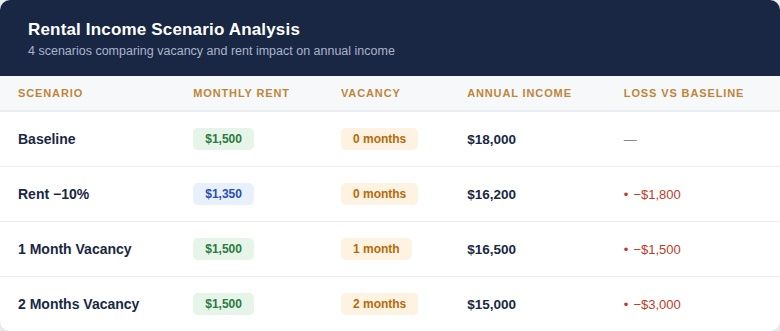
Investors who underwrite deals based on rising rents may expose themselves to financial pressure. Unmet projections due to vacancy can be a major risk factor. Unoccupied units fail to bring in income while expenses accumulate. Even a single month of vacancy can outweigh the necessary price adjustments to quickly attract new residents.
Larger investors and developers face significant risks due to the scale of their portfolios and operating costs. Projects involving hundreds or thousands of units are more susceptible to extended declines in rent and challenges related to occupancy.
Declining rents also impact long-term performance metrics, specifically Internal Rate of Return (IRR) and overall asset valuation. By adjusting expectations and strategies, investors can account for changing market conditions. Accurate data and realistic financial modeling become critical when evaluating new acquisitions and existing properties.
To interpret declining rents when evaluating markets, investors need to understand that it isn’t a red flag but a signal to dig deeper. Investors must understand:
What asset class is being affected
Whether the issue is temporary or structural
How current rents compare to the long-term trend
How Can Investors Protect Themselves in a Declining Rental Market?
The investors who hold up best in a declining market are the ones with accurate local data, a disciplined pricing strategy, and a property manager who moves fast.
The more information investors have, the better their decision-making can be. Investors can protect their portfolio by focusing on proactive, data-driven property management strategies:
Prioritize lease renewals over top-of-market pricing, since retaining a good resident costs far less than a vacancy.
In a flat market, pricing decisions need to be data-driven, and if showings aren't converting, the price is the problem.
For example, a unit sitting vacant for just one month at $1,500 results in a direct $1,500 revenue loss—before factoring in ongoing fixed costs like taxes, insurance, and maintenance. You’re often better off renting it faster at a slightly lower price. Timing and execution matter more than trying to maximize rent at all costs.
Experienced property managers can help investors navigate changing rent trends by relying heavily on real-time Comparative Market Analysis (CMA) data and daily performance tracking. By monitoring listing visibility, showing activity, and conversion rates, the right property management company can help adjust pricing quickly to keep properties performing.
What Should Investors Do in the 2026 Rental Market?
In 2026, the investors with an edge are the ones watching leading indicators — not lagging ones. Days on market, showing activity, and inventory trends act as leading indicators, often signaling rent direction before it shows up in data or income trends.
By tracking rental demand, examining current trends, and monitoring new construction projects, investors can better anticipate future increases in supply. Migration patterns are crucial because population shifts directly impact housing demand.
Trends in rental markets vary across different regions of the country. The Southeastern Wisconsin market, for instance, remains stable. Markets like this one could offer more predictable cash flow and long-term investment potential than more volatile areas.
Prolonged vacancy is the biggest risk to investors, which can happen due to mispricing or delayed market adjustments. A data-driven strategy for pricing, leasing, and renewals can help investors remain competitive in ever-changing conditions.
Southeastern Wisconsin continues to offer what most volatile markets fail to provide: predictable cash flow, balanced supply and demand, and a tenant base that stays put. For investors evaluating new acquisitions or reassessing existing properties, that stability is worth more than headline rent growth in a market that can reverse overnight.
Prolonged vacancy is the single biggest risk in this environment, and it's almost always the result of delayed pricing decisions. A professional CMA gives you real-time market intelligence to price right, lease fast, and stay competitive before a slow month turns into a costly one.