How Does PAM Determine Whether a Cost Is Justified?
Imagine a landlord in Milwaukee, WI, leaving a lawnmower at their complex for tenants to use. Instead of a win-win situation for convenience, the investor gets hit with $250,000 in liability fees after a resident gets injured. A moment like this illustrates how you could benefit from a property management company stepping in beforehand to prevent a costly decision.
When a property management company evaluates costs, it involves showing investors how spending directly contributes to stronger returns. The weight of costs is measured in terms of immediate expense and their ability to protect or enhance a property's income over time. At Performance Asset Management (PAM), cost management support involves evaluating every fee and expense through a high-powered lens that keeps investors safe.
While some property managers review costs solely on operational expenses, our strategic cost evaluation prevents unnecessary expenses that don’t add measurable value.
By the end of this article, you will understand how PAM evaluates cost and decide whether this approach aligns with your investment strategy, ensuring every dollar spent actually works toward long-term investment wins.
Which Costs Does PAM Absorb vs. Pass On to Investors?
PAM absorbs costs tied to management performance but passes on operational expenses, such as lease renewals, maintenance, and management fees, for transparency.
By being clear about which costs are our responsibility versus those that investors take on, investors reap benefits when management can make proactive spending decisions rather than reactive ones. For example, as property managers, we cover these performance-related costs:
Resident placement fees when a PAM-placed tenant vacates within the first 12 months
Releasing costs tied to resident underperformance or improper placement
Internal administrative costs related to correcting placement or management errors
While investors would pay for these operational and ownership-related:
Lease renewal fees for residents who remain in place
Monthly property management fees
Routine and preventive maintenance expenses
Rent-ready and turnover costs after a normal lease expiration
Capital expenditures (CapEx) such as furnaces, roofs, or major system replacements
Approved repairs and upgrades that protect asset health and long-term performance
This distinction shields investors from costs tied to underperformance while preventing unwanted surprises in investor statements. At the same time, this approach places an incentive on us to carefully select residents who will also perform well as residents.
For example, if PAM signs a resident who decides to break their lease or needs to be removed within the first 12 months, we absorb the resident placement cost instead of charging the investor. While the investor may still need to pay a re-leasing fee, PAM treats early turnover as a performance issue, not a normal operating expense, and takes responsibility.
How Do Management Costs Affect Long-Term Investor Outcomes?
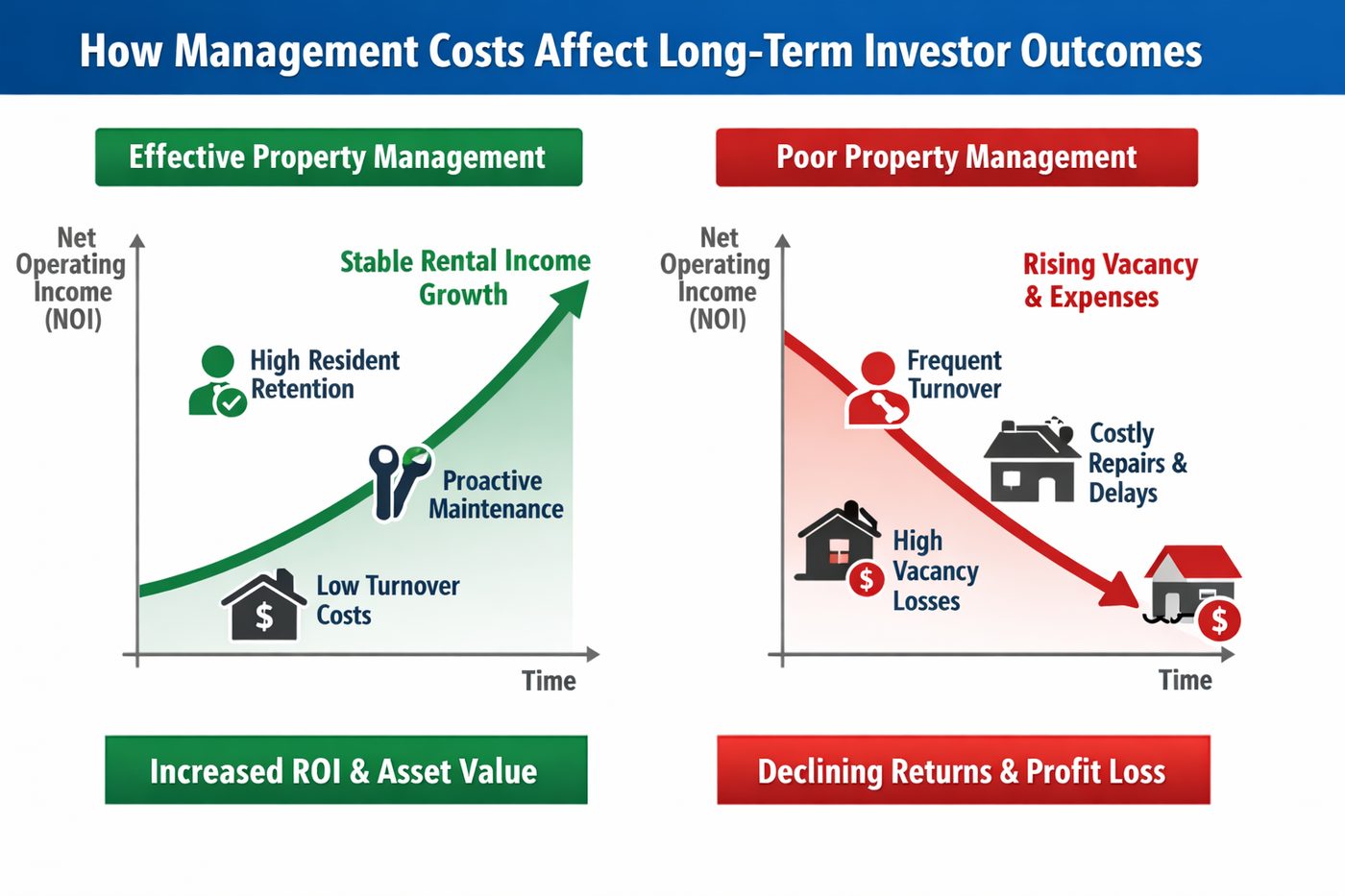
Management costs influence resident retention, vacancy rates, rent stability, and asset health, as strategic property management can reduce turnover and protect net operating income over time.
Over time, management costs can significantly impact a property investment. While fixed fees, such as management and placement fees, are predictable and relatively easy to plan for, the level of efficiency that investors use while navigating variable expenses generally has a more significant impact.
A high-performing property manager should reduce turnover and maintain a stable rental income. By managing expenses and allocating resources effectively, such as for preventative maintenance, investors can reduce costs related to frequent turnover and rent-ready expenses, thereby enhancing long-term returns.
Investors gain an advantage by reviewing expenses over the duration of lease terms rather than focusing on individual years. In the same vein, investors who focus on low fixed fees may miss a larger picture: variable cost management on overall ROI. Deciding to work with a property manager can offer protection from missed opportunities in terms of enhancing property value.
How Can Investors Interpret Cost Increases Over Time?
Investors should interpret cost increases over time as a normal part of rental property ownership to ensure expenses protect long-term returns and rental income stability.
As property costs fluctuate over the life of an investment, tenant turnover and resident replacement will be the most significant drivers of cost increases. While aging properties may require higher maintenance expenses, strategic upgrades can help offset these costs.
With inspections that are both CapEx and income-based, PAM can use data to anticipate future spending. Recurring costs can be lowered by making strategic replacements, such as selecting durable flooring instead of carpeting, and repairing or replacing essential systems like furnaces, roofs, and plumbing when necessary.
Harping on costs that spike in one year often yields a slanted view. However, analysing expenses across multiple lease teams helps provide a more accurate picture. Accurately documenting cost drivers aids in understanding fluctuations and planning for realistic ROI projections.
How does PAM maintain transparency and value for investors?
PAM maintains transparency and value for investors by clearly documenting all costs and explaining each expense, from maintenance to resident placement, to build trust and encourage informed investment decisions.
Documenting each cost ensures that investors understand the why behind each decision. Whether that involves preventing hundreds of thousands of dollars in liability issues from an investor-provided lawnmower to strategically managing resident placement and maintenance, PAM ensures that financial decisions safeguard investor returns.
Other examples include evaluating whether to repair or replace a furnace based on a cost-benefit analysis and future repairs. Proactive cost management and analysis align with resident satisfaction by prioritizing tenant-focused decisions, stabilizing leases, and minimizing turnover.
In Wisconsin and other Midwest markets, property management costs for turnover and maintenance vary seasonally, and PAM uses data from these regions to optimize returns.
PAM’s Cost Philosophy: Predicting Long-Term Performance
Understanding how PAM evaluates costs gives you a clearer view of how strategic spending protects resident retention, liability protection, and long-term asset performance. If you’ve ever questioned whether or not management fees, turnover costs, or maintenance decisions are in line with your returns, you’re asking the right questions.
For even more information, explore our content on investor onboarding at PAM. Find out how cost alignment begins before the actual property management even starts. To evaluate your current cost structure, let us review your expenses to determine whether they’re supporting your goals or taking away from the future you want to create.