What Did the FTC's Lawsuit Against Greystar Allege?
When the Federal Trade Commission (FTC) alleged that Greystar advertised low base rent but disclosed mandatory, hidden fees only after tenants paid, it surprised some managers. But Performance Asset Management (PAM) Owner Jim Miller saw it coming. “I’m just like, what?” was his reaction to learning a competitor charged new tenants a $500 move-in fee, while another was raking in nearly half a million annually in resident fees. “I just can’t do it,” said Jim.
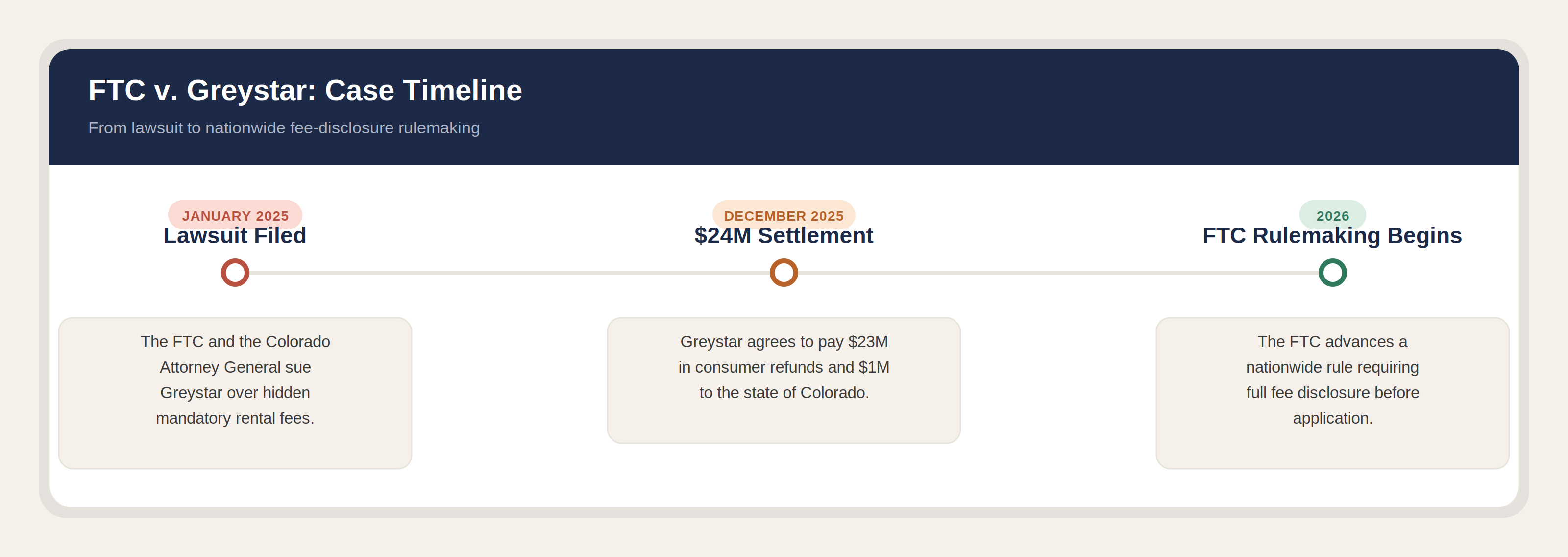
Wisconsin investors rarely worry about resident benefit packages until litigation impacts the industry. But that is exactly what happened in December 2025, when the nation’s largest multi-family rental property manager was forced to pay $24 million to settle FTC and Colorado v. Greystar. That settlement exposed how rental fees create legal and financial risks for investors.
Jim had an instinct that something was off, and it turned into a warning. To stay protected, Wisconsin investors need to know they carry liability for fees their property manager charges. Here is what got the federal government involved, how it impacts the Wisconsin property management industry, and what investors should do next.
Why Did Resident Benefit Packages Draw Federal Scrutiny?
A resident benefit package bundles add-on charges in a lease beyond advertised rent, and regulators scrutinize the charges because they are often mandatory for tenants.
Some of the more common bundled charges in these hidden fees include pest control, credit reporting, and risk mitigation fees. These packages generate recurring revenue for the property managers that owners could be reinvesting back into the asset.
More than half of renters are cost-burdened, spending at least 30% of their income on rent, and, as a result, struggle to afford other basic necessities. In 2023, consumers experienced the largest annual real increase in rental costs since at least 2011. And failure to advertise the total rent impairs consumers' ability to comparison shop for rental housing, reads the FTC report.
Because tenants usually cannot opt out once they sign, the FTC proposed a rule requiring full monthly costs to be disclosed before application. The National Association of Residential Property Managers (NARPM) proposed a similar standard for total leasing prices, requiring mandatory fees to be disclosed prior to application fees being collected.
Standardized disclosure forms would enable software to consistently display fees nationwide. The NARPM wants to ensure cities cannot create local rules that conflict with national compliance standards, while the FTC approach focuses on transparency rather than banning the fees.
Several major national landlords have adopted resident benefit packages over the past decade, and consumer advocates say these packages are rent increases without disclosure. For more information on how this applies to southeastern Wisconsin property owners, read NOI Alignment: How to Evaluate a Property Manager's Fee Structure.
How Does the Greystar Case Impact Wisconsin Property Investors?
Wisconsin investors carry direct liability for fees their property manager charges tenants, and that liability applies even when the investor never collects or sees that revenue.
Certain rental-agreement terms, including the amount of rent, have to be set out in the lease, according to Wisconsin Chapter 704 statutes. State courts have already scrutinized undisclosed lease fees in recent rulings. In Koble v. Marquardt, the case highlighted the fact that Wisconsin's investors are on the hook for improperly disclosed fees.
Anytime an investor hires a manager who uses undisclosed fees, risk factors for fines and litigation significantly increase. Because federal scrutiny on fees often precedes similar action from state regulators, investors should review the language in the lease annually to help catch liability risks early.
Local managers who bundle fees face the same liability exposure nationwide, and investors working with out-of-state property management companies should also confirm fee disclosure practices early.
How Does PAM's Fee Model Compare to Resident Benefit Packages?
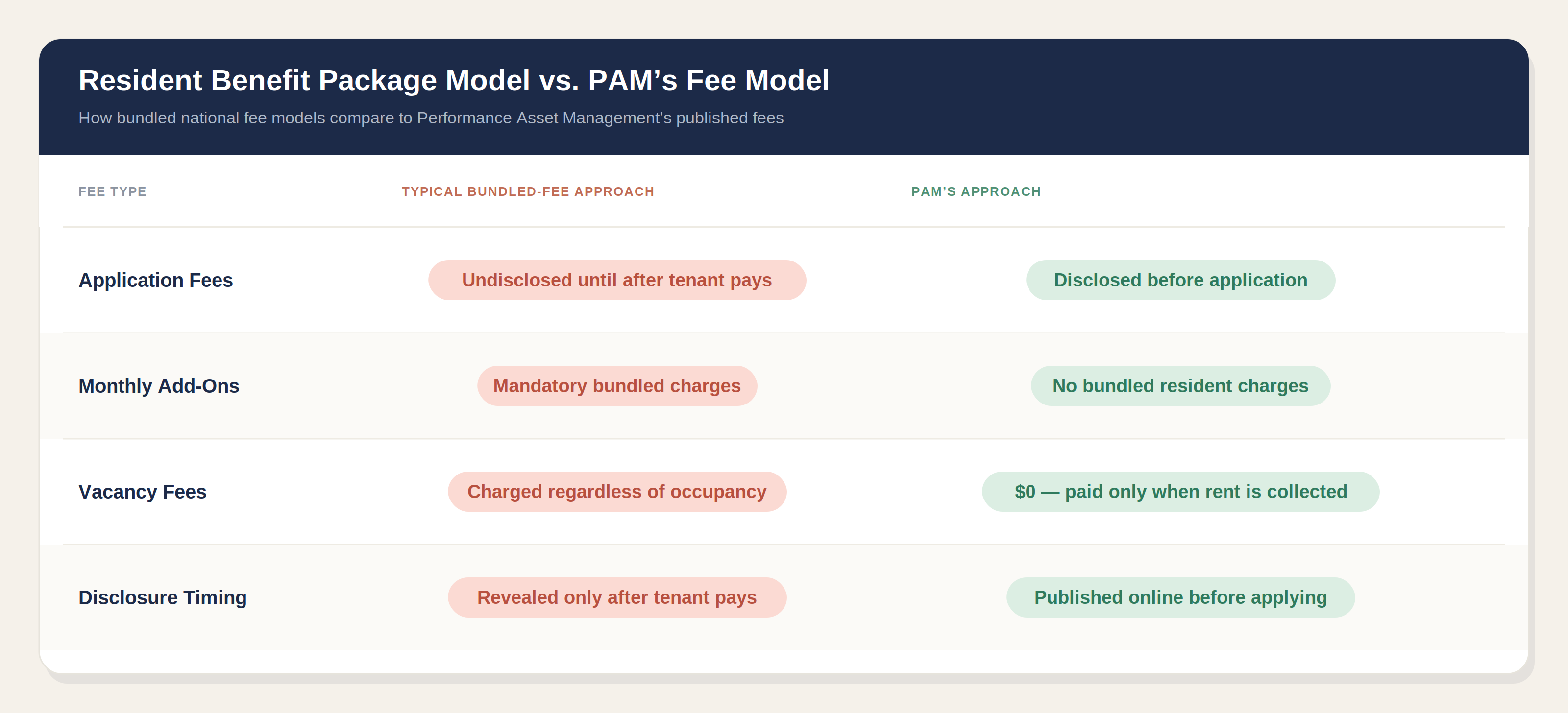
PAM charges one flat management fee of 8%, capped at $250 monthly, and PAM's leases exclude the mandatory add-on charges common in resident benefit packages.
Because PAM only collects when residents pay their rent, PAM doesn’t charge during vacancy. This aligns with investors' income. Every fee PAM charges investors and residents is published on the website, and applicable fees get disclosed to residents before they submit an application.
For the past 17 years, PAM has managed properties throughout southeastern Wisconsin. At this stage, PAM has an occupancy rate of 98%, a lease renewal rate that has reached 88.76%, and an eviction rate that remains under 1%. These stats are a part of our property management scorecard, which an investor can use to shop managers by comparing hard data.
PAM also has an Exit Guarantee that lets investors cancel anytime without penalty. This model builds long-term investor and resident trust. Investors in the market for a new property management company or anyone who wishes to know where their manager stands should request the same transparency.
What Should Wisconsin Investors Do Before the FTC's New Fee Rule?
Investors should request a written list of every fee charged to tenants, confirm no fee gets disclosed only after a tenant pays an application charge, and review any current lease against Wisconsin's Chapter 704 disclosure requirements.
The Greystar settlement in December 2025 happened without the company admitting wrongdoing. However, investors should understand this case. Because Greystar disclosed added charges only after tenants had signed a lease agreement, it was ordered to pay $23 million toward direct consumer refunds and an additional $1 million to the state of Colorado.
The case became one of the FTC's largest rental housing enforcement actions to date. It illustrates the importance of fee transparency as a liability issue. Federal rulemaking in 2026 may eventually require these same disclosures nationwide. Acting now protects investors before compliance becomes a legal requirement later.
Ask whether any resident charges function as undisclosed rent increases in disguise, and confirm your property manager reviews lease language annually with qualified legal counsel. Request documentation showing exactly how fee revenue gets collected and distributed. Then, compare your current property manager's fee model against PAM's published structure.
Investors deserve a property manager whose incentives align with their own performance. Demand more transparency from managers and avoid regulatory consequences. Transparent fees protect investors, residents, and property managers from costly legal risk. Contact PAM to review your property's current fee exposure.