What Does Humanation Mean for Wisconsin Leasing?
Humanation is the Performance Asset Management (PAM) process that blends automated systems with support from real people during critical leasing moments. Seventy percent of the applications PAM receives come with questions, according to Jim Miller, PAM's founder. And many of those questions are inquiries automation alone can't resolve. Ignoring those questions means prospective residents disengage and move on.
PAM created a leasing process that balances automation and human judgment, which all investors can learn from. Working with residents in over 450 units across southeast Wisconsin requires a deliberate strategy. And how a company handles a prospective resident is exactly how they will handle questions from owners and their residents.
Helping residents contact a real person makes them feel more secure in their housing decisions, which are often among the most personal purchases people make. Automation drives clarity, but real people need to step in to solve problems. Continue reading to learn about our strategy for building trust before a lease is signed.
Why Doesn't Automation Alone Work for Leasing Conversations?
Automation alone fails because most applications generate questions a workflow fails to address, and residents shop for rentals around the clock. Neglecting that human layer means missing signals that could jeopardize a lease.
The modern landscape for the rental marketplace operates 24 hours a day, 365 days a year. PAM data shows most rental applications need human follow-up, and the rental market itself never closes. According to the Zillow Consumer Housing Trends Report 2024:
66% of renters considered lease terms, rent, and fees essential.
62% said taking a private tour was essential.
55% said speaking with the landlord or property manager was essential.
43% of renters signed their lease electronically in 2024, up from 40% the year before.
25% of renters passed on a property because it didn't offer the option to apply online.
These statistics indicate that renters expect a convenient process while having access to real people who can answer leasing questions or show units.
Automation does a great job of keeping leasing information visible, consistent, and delivered on schedule. But it also misses the mark when it comes time to detect hesitation or confusion. It cannot detect unspoken concerns within a message, and a missed signal during leasing can cost an investor a signed lease from a long-term, stable resident who continues to renew.
Where in the Leasing Journey Does Human Outreach Make the Biggest Difference?
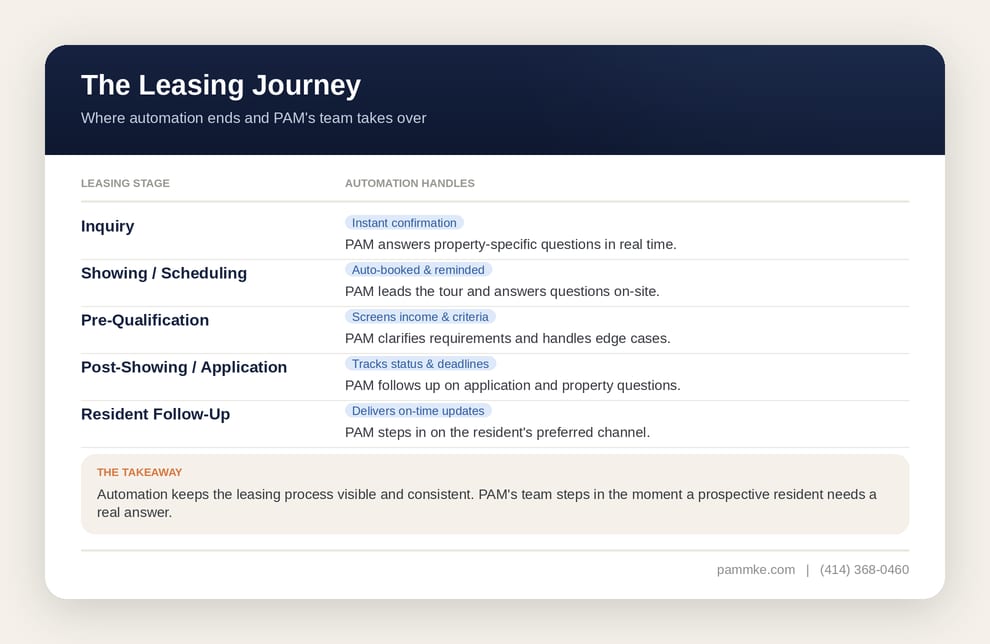
Human outreach matters most during pre-qualification, property-specific questions, and post-showing follow-ups on applications.
Because human outreach is so critical before leases are signed, PAM lets residents pick their preferred contact channel and stays consistent. The prequalifying questions often cover income requirements, screening criteria, and specific terms. During this part of the process, applicants frequently ask about bedroom sizes, garage space, and living details.
After a showing, potential residents tend to ask about the property or the application process. At PAM, the team continues to communicate with applicants using text, email, or phone, whichever the potential resident chooses. This creates consistency and signals that PAM can be trusted. Additionally, fast, accurate responses show efficiency.
What Happens When Property Managers Overuse Automation in Leasing?
Over-relying on automation erodes trust faster than it builds efficiency, because inaccurate responses make residents doubt the property manager, which can shadow the tenancy.
Generic responses undermine confidence in property management companies, and when residents doubt the information they receive, they become disengaged. Early skepticism can also carry over during a lease term.
Artificial Intelligence usage among property owners surged from 21% in 2024 to 34% in 2025, according to the National Apartment Association's analysis of the 2025 AppFolio Property Management Benchmark Report. But automated touchpoints need a clear, fast route to a person when automated systems cannot answer a question.
How Can Investors Tell If a Property Manager Actually Practices Humanation in Leasing?
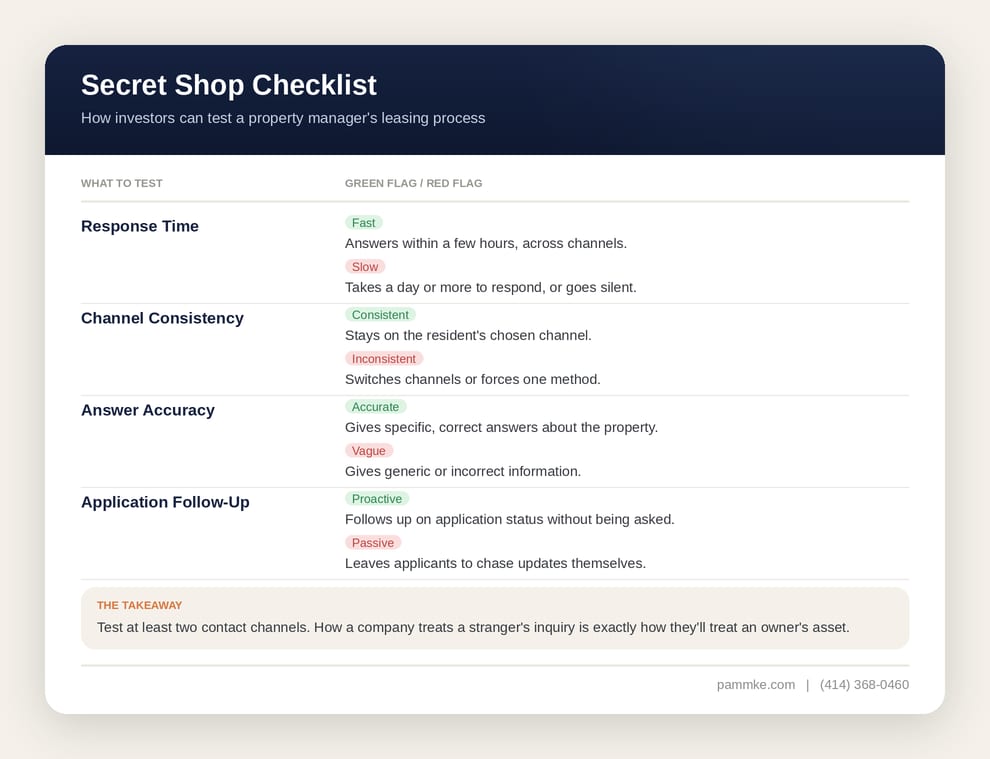
Investors can secret shop one of a manager's active vacancies from inquiry through application, testing multiple contact channels.
More specifically, investors who are curious about their property manager should test the full process: inquiry, scheduling, and application-stage questions.
Consider contacting the leasing team through at least two different channels, such as email or phone. Compare response time, accuracy, and consistency across the two methods of communication. A slow or inconsistent experience signals a weak resident-facing process. However, strong responses with human support during a test indicate genuine practices.
What Should Wisconsin Investors Learn from PAM's Humanation Approach?
The PAM humanation approach rests on the belief that automation and manual processes both support residents at critical leasing moments, and the most successful strategy is to blend both.
Humanation works best because leasing is a personal matter that requires providing answers to potential residents throughout the pre-leasing process. During this critical period, PAM combines the reliability of automation with human judgment at every crucial step because using either process in a vacuum fails to provide the best support for the resident or investors.
Investors evaluating a manager should test this balance before signing on. Go through the process that they offer to potential residents. Ask questions and hear the answers. For more information on areas where property managers can best support potential residents, schedule a conversation with PAM.