How Does PAM Onboard a New Wisconsin Property Investor?
A Performance Asset Management (PAM) investor recently looked at the first week of activity for his new listing: three showings and two solid applications. Despite being advised by the PAM leasing team, he raised the rent. Within days, both applications were gone. The unit sat empty for two months.
The unit was leased almost immediately after the price was adjusted to the original figure suggested by the Comparative Market Analysis (CMA) report, which identified competitive trends and comparable properties in southeastern Wisconsin. That same investor told PAM Leasing Coordinator Lucas Bandeira, “I take full responsibility for it.”
One mistake during onboarding cost an investor two months of rent on top of the expenses he paid on that property without any income coming in. Pricing is just one piece of a much longer process most investors never see. Here's what actually happens behind the scenes, from signed contract to leased property.
What Marks the Start of PAM's Onboarding Process?
The onboarding process begins the moment an investor signs their management contract with PAM.
Once Lucas receives notification from the PAM contract team, he immediately reaches out to the new Wisconsin investor to prevent communication gaps and set the tone for the business relationship. The entire PAM onboarding process is remote, which expedites the initial onboarding steps since there is no need for an in-person meeting.
Investors receive a welcome email requesting key financial and property setup information so that PAM can process resident rent checks. PAM needs the following: banking details, tax information, and Social Security or LLC numbers for 1099 filing. Mailing address, phone number, and email are also collected during this first exchange.
Lucas sends a Rentvine portal along with the welcome email. Once the financial details arrive, PAM requests specifics about the property, including the number of rooms, bathrooms, and square footage. This basic property data allows Lucas to build the page inside Rentvine.
That portal is primarily how investors communicate with PAM when emergency issues arise and are resolved. For example, when sub-zero temperatures hit southeastern Wisconsin every winter, investors receive instant notifications if pipes burst and HVAC systems fail. Additionally, they get updates on the status of repairs for those kinds of issues.
What Determines a Property's Onboarding Path?
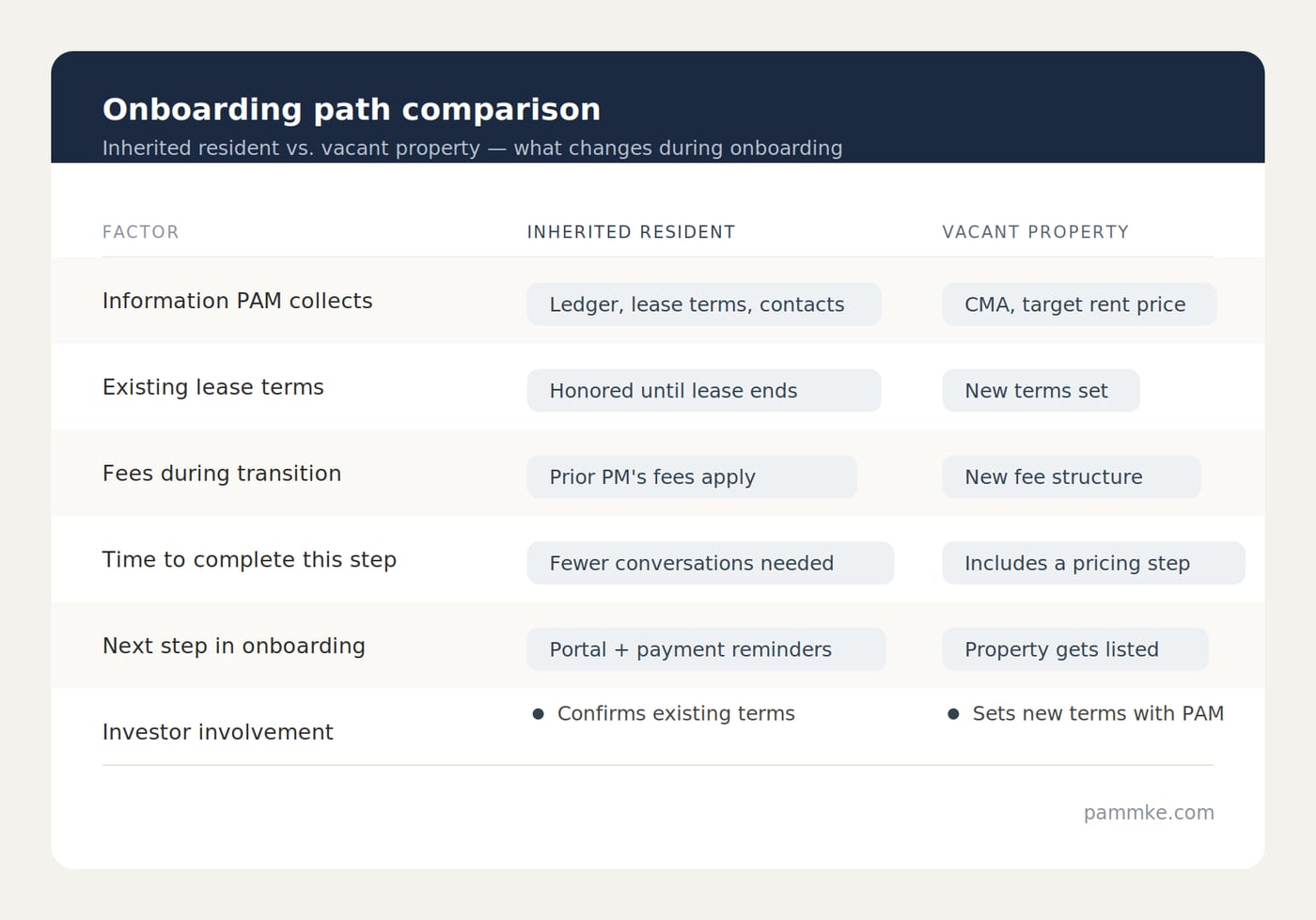
Every onboarded property falls into one of two paths: vacant or already occupied.
When there are investor properties and a resident already lives there, PAM refers to this as an inherited resident situation. In this situation, PAM collects the current ledger, lease terms, and contact information. The ledger is used to let PAM know whether the resident owes back rent or unpaid utility charges.
To remain compliant with Wisconsin Statute Chapter 704, which treats a signed lease as a binding agreement for its full term, PAM honors existing terms and fees exactly until the lease ends. However, if the unit is vacant, the investor and PAM discuss a target price. PAM uses market analytics and detailed reports to add to the conversation about rental pricing.
How Does PAM Decide What Rent a Property Should Charge?
PAM builds a CMA based on real market data to avoid inaccurate assumptions or guesses.
PAM informs investors that their desired rent will be the aim, depending on market conditions. Every Monday, PAM sends investors a report that details the leads, showings, and applications received that week. Lucas reviews the reports and may recommend price drops of $50 to $100.
A property listed for more than 14 days without traction can be a signal that it is overpriced. The problem with overpriced properties is that they can lead to vacancies plus compounded expenses, such as energy bills, lawn maintenance, or snow removal.
The southeastern Wisconsin investor who lost two months of rent by raising the rental price learned the significance of the CMA report. To support investors, PAM charges a management fee based on the rental amount, keeping incentives aligned. Because of that structure, PAM has no motivation to underprice a property to lease faster.
Who Handles Communication During and After Onboarding?
PAM Leasing Coordinator Lucas Bandeira handles communication throughout onboarding, then dedicated investor and resident channels take over once a property is fully onboarded.
As the first point of contact throughout the onboarding process, Lucas walks investors through each step and, where necessary, provides reassurance that the property is in capable hands. After answering any questions and collecting necessary information, the resident relationship is handed off to Frida Sermeno, who is in charge of the PAM inspection process.
PAM welcomes new residents with messaging and gives them portal access to report emergencies requiring same-day responses and non-emergencies. Resident payments are confirmed through reminders sent once a week and three days before due dates. After payment begins, residents are given a dedicated phone line and a resident-specific email address.
Investors receive a portal notification when emergency work orders are opened and resolved. Additionally, they have separate channels: a phone line and an email address for ongoing questions.
How Long Does the PAM Onboarding Process Typically Take?
The entire onboarding process typically takes five days from the first contact. Highly responsive investors can move through data collection in as little as a day. But those with more questions who require frequent updates extend the communication timeline.
Getting a property rent ready and then fully listed marks the second major milestone after the signed contract, as the time it takes to lease a property varies widely. It depends on several factors, including price, location, and condition. While some properties can be leased in three days, others can take 60 days or longer.
For example, a well-priced luxury property once leased in just three days despite its high rent. But a property that needed full-scale renovation sat unlisted for months before finally reaching the market. Investor willingness to adjust prices or complete repairs directly influences how quickly a unit leases.
How Does PAM Complete the Onboarding Process?
The PAM onboarding process concludes at the 30-day mark when investors are contacted to confirm their satisfaction and to allow them the opportunity to ask questions.
When the onboarding process ends and all questions are answered, satisfied investors receive a link inviting them to leave a Google review. Onboarding involves sharing information that is new to investors, but leasing is a separate process. Once investors are fully onboarded, future leasing activity shifts into PAM's standard property management workflow.
What Should Investors Take Away From PAM's Onboarding Process?
The real lesson of onboarding is that there’s more than paperwork. It is a process that provides information to investors seeking to utilize established resources. From the signed contract to the Rentvine setup, the CMA conversation, the inspection handoff, and the timeline that follows, every step exists to get an investor to a leased, income-producing property with as few surprises as possible.
Onboarding establishes the foundation for the relationship with PAM, offering investors a clear understanding of available resources and guidelines on how to communicate their questions.
Then, the property transitions into the PAM management process, which also relies on reporting, communication, and performance tracking.
If you're evaluating a property manager or considering a switch, schedule a conversation with Jim Miller to see what onboarding with PAM actually looks like for your property.