What Makes a Wisconsin Rental Unit Illegal?
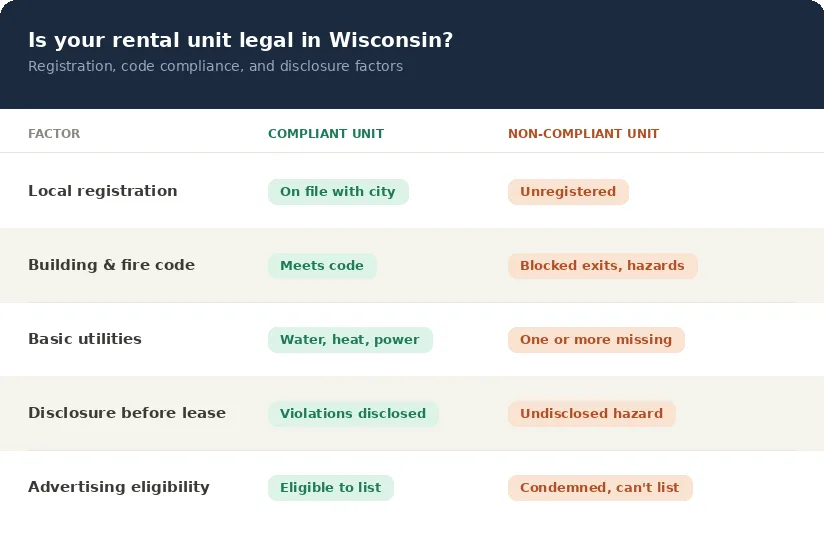
A Wisconsin rental unit is generally considered illegal when it violates local zoning ordinances, fails building or fire codes, or has been condemned as unsafe.
But landlords tend to assume the term "illegal apartment" means something dramatic, like a condemned building owned by a slumlord, when it's often just an unpermitted basement unit nobody thought to register.
That situation could lead to an investor holding a unit off the market while waiting for the space to meet code requirements. Another issue property owners face is the fact that local laws vary across southeastern counties outside of Milwaukee. What's compliant in Waukesha, Racine, and Kenosha might not fly in Ozaukee. Landlords have a legal duty to comply with local housing codes under state law.
Wisconsin law treats it as a habitability violation when a unit lacks working hot and cold water, heating, electricity, plumbing, smoke detectors, and a space free of hazards like mold, rodents, or things that could injure a person, under Wis. Stat. § 66.0104.
Performance Asset Management (PAM) provides compliance and local execution fluency to help property owners with registration status, lead disclosure, voucher handling, and fair housing. Know where the lines get drawn and how to stay on the right side of them to keep a property compliant before it ever becomes a problem.
Do Wisconsin Cities Require Property Owners to Obtain Rental Certificates or Permits?
State law limits how much reach Wisconsin-area cities actually have. Wis. Stat. § 66.0104 blocks cities from requiring full rental certification, though narrow registration or complaint-based inspection programs may still apply.
Statewide statutes set a ceiling for municipalities in Wisconsin by defining what cities, villages, towns, and counties cannot require. For example, Milwaukee property owners had to obtain a rental certificate before legally renting a unit. State law preempted that certification requirement through 2015 Wisconsin Act 176, effective in 2016.
A city may still require basic registration, including the property owner's name and contact information. Cities can also send an inspector to a unit if someone files a complaint. Depending on the district, a city may establish an inspection program that includes periodic re-inspections in that specific justified district.
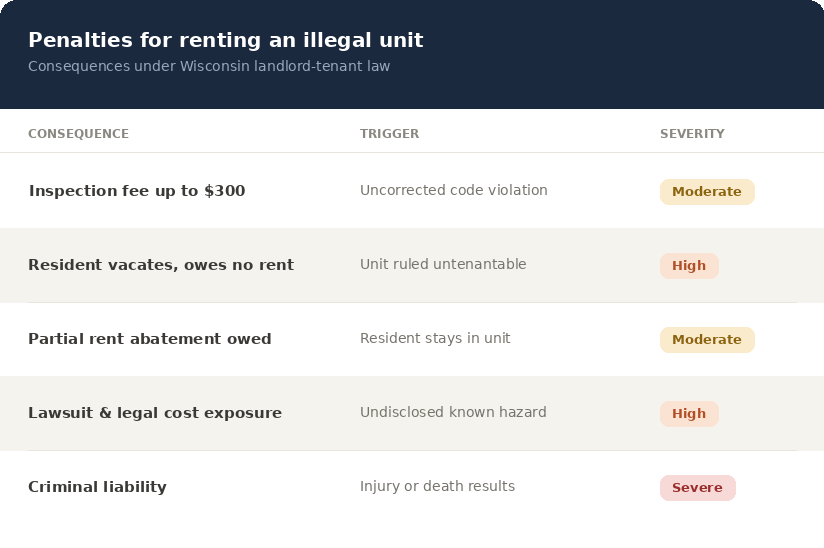
When residents refuse to let inspectors access the home, a municipality can seek a special inspection warrant under Wis. Stat. § 66.0119. Property owners who fail to correct the violation within the specified timeframe can be charged an inspection fee of up to $300, according to Wis. Stat. § 66.0104(2)(e)2.am.
For investors, this means blanket inspections without a cause are off the table. Property inspections may happen because of complaints or if located in areas with known issues, provided specific conditions are met. Confirming current requirements directly with the local municipality avoids costly compliance mistakes later.
What Happens If Property Owners Rent an Illegal Apartment in Wisconsin?
Consequences for violating state or local laws range from municipal fines to a resident's right to vacate without owing future rent. In more severe cases, consequences can include lawsuits, forced correction orders, or even criminal exposure.
The severity of the violation has an impact on the punishment. For example, fire-code violations, such as blocked exits, are often treated as some of the most serious issues. Depending on the municipality, some violations may accrue fines daily until the issue is corrected. Some of the more common requirements and resident rights include:
- A resident can vacate without owing further rent, unless the landlord promptly repairs, because of a health hazard or a substantial violation of the landlord's duties under Wis. Stat. § 704.07(4).
- Residents who remain in an untenantable unit may be entitled to partial rent abatement under that same statute.
- Wis. Stat. § 704.44(4m) prohibits landlords from requiring residents to cover the landlord's own attorney fees or legal costs.
- Wisconsin landlords may not advertise or rent out a condemned property, per Wis. Admin. Code § ATCP 134.09(1).
In extreme cases, repeated or uncorrected violations can lead a municipality to require removing a unit. Severe violations resulting in injury or death may expose a landlord to criminal liability under general Wisconsin law. A pattern of illegal-unit violations can create lasting reputational damage that's difficult to reverse.
How Can a Wisconsin Property Owner Avoid Liability for an Illegal Unit?
Property owners who know about a serious code violation must disclose it before signing a lease or accepting a deposit, under Wis. Stat. § 704.07(2)(bm). Failing to disclose violations can create liability exposure beyond the original issue.
Even when an investor appoints a property management company to handle day-to-day operations and work more closely with residents, the statutory disclosure duty typically remains in effect. Though the specifics can depend on the management agreement, a single undisclosed hazard can escalate into a resident lawsuit months after a resident moves in.
A resident who loses money because of an undisclosed violation can sue for twice that loss, plus costs and attorney fees, under Wis. Stat. § 100.20(5), though the Wisconsin Supreme Court has held that double damages require proof of actual financial harm.
Southeastern Wisconsin investors can underestimate how quickly one violation can compound into legal and financial exposure. However, working with a manager who is familiar with local codes can help investors avoid overlooking a disclosure obligation.
How Does PAM Help Wisconsin Property Investors Avoid Penalties?
PAM helps investors stay compliant through the same Investment Advisory process that runs a compliance screen for registration status, and through ongoing maintenance and inspection practices built around Milwaukee's specific regulatory requirements.
Investors working across multiple Milwaukee-area counties should never assume permit requirements in one municipality automatically apply to another. Instead, consider working with a property manager who specializes in:
- Verifying current permit and registration status directly with the applicable municipality before listing
- Documenting repairs and property conditions to protect against future liability or resident disputes
- Running scheduled inspections and fast emergency response so known issues get addressed before they become violations, rather than waiting for a complaint to surface
- Staying current on local regulatory specifics (e.g., Milwaukee's DNS processes and lead-safe requirements for older housing stock) that shape how maintenance and compliance get prioritized
PAM performs these tasks to support property owners. Investors benefit from keeping their asset compliant by proactively avoiding liability issues. For more information, speak with an expert at PAM to learn more about avoiding penalties before they happen.